For Ram & Laxman
Hampi Art Labs- 2025
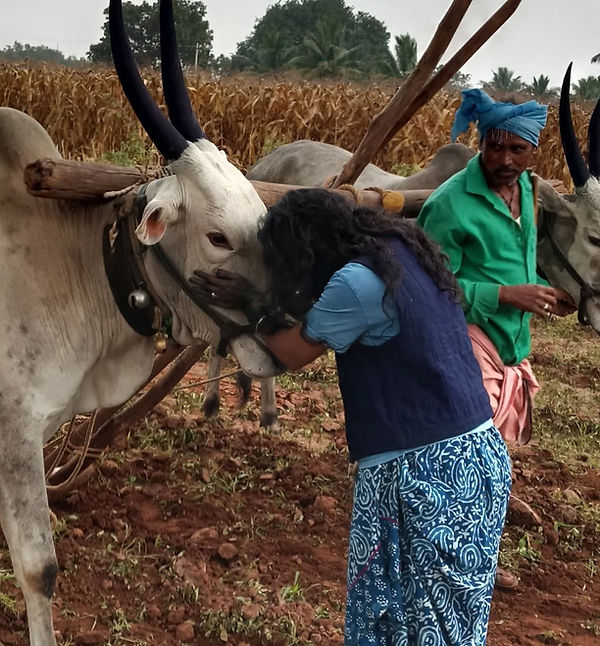
Blue returns to the field.




Materials
Naturally fermented indigo ink
Working oxen
Process
Indigo fermentation
Horn application
During a residency at Hampi Art Labs, I spent time with farmers in the agricultural landscape surrounding Hampi, where traditional ox-ploughing continues in rice and cotton fields. Together with Kyoko Nishimoto and the BUAISOU team, these visits became an opportunity to observe the working relationship between farmers, oxen and the land.
These encounters returned indigo to its agricultural origins—not only as a dye, but as a cultivated plant. Using naturally fermented indigo, I developed a plant-based horn coating with natural binders and locally sourced gum. The application explored indigo beyond the textile, returning the material to the landscape from which it first emerged.
In several agricultural traditions, indigo has been associated with insect-deterrent properties. Rather than treating the horns as a decorative surface, the work considers how a cultivated plant might continue to serve the everyday relationships between land, farmer and working animal.
Photography Kyoko Nishimoto (BUAISOU)
Field research and on-site assistance BUAISOU and Hampi Art Labs